loader image

Author name: bitumenforumindia49@gmail.com

Insights

EXPERTIES joins WIL Group’s global interim management network as its Country Partner in India

EXPERTIES joins WIL Group’s global interim management network as its Country Partner in India WIL Group is proud to announce EXPERTIES as its Country Partner in India. This partnership represents an important expansion for WIL Group into one of the world’s fastest growing and most strategically significant markets, further strengthening the Group’s ability to support clients operating in or entering India. India’s increasing role in global supply chains, manufacturing, technology, and services is driving strong demand for experienced leadership and transformation expertise. The collaboration brings together WIL Group’s global interim management capabilities with EXPERTIES’ deep local market knowledge and execution strength, enabling clients to navigate complexity, scale operations, and deliver sustainable results in the Indian market. “This partnership with EXPERTIES reflects WIL Group’s strategic focus on markets that are critical to our clients’ global ambitions. India is a key pillar of international growth, particularly in light of the accelerating EU–India partnership. By welcoming EXPERTIES as our Country Partner, we reinforce our ability to deliver trusted interim leaders and tailored solutions that help clients convert economic opportunity into tangible outcomes,” – Alexander De Beir, Chairman of the WIL Group. The recently signed EU–India free trade agreement is expected to deepen cross-border trade, investment, and industrial collaboration. As organisations respond to this momentum, the need for experienced interim leaders who can manage transformation, integration, and cross-border complexity is increasing. WIL Group members are well positioned to support this transition with proven leadership and execution capability. “Joining WIL Group’s network allows EXPERTIES to provide WIL Group clients interim management support in India and similarly, offer clients in India access to global best practices through an international network of interim leaders. As global cooperation accelerates, organisations will require capable leadership on the ground to translate ambition into performance.” – Priti Gulati, Founder of EXPERTIES. About Us The WIL Group is a global collaboration of leading interim and transitional management companies across 37 countries. We’ve come together to form a powerhouse, delivering unparalleled global interim and transitional management solutions. Our vision and approach At WIL Group, our vision is clear – to be the foremost company for global interim, transition, and transformation managers. We’ve embraced a unique ‘international multi-sourcing’ model, harnessing the strengths of each member firm to ensure the selection of the best talent for global assignments. Our services Performance Improvement & Digital Transformation Restructuring & Turnaround Private Equity & Integration of Acquisition International Deployment & Program Management Values and business code of conduct Our commitment to excellence is anchored in our core values and reflected in our Code of Conduct: Client dedication: We meticulously define each assignment, utilising our full resources to find optimal solutions. Regular meetings with clients and Interim Leaders foster a culture of continuous improvement and shared knowledge. Ethical practices: Clients’ interests are paramount. We adhere to local laws, business ethics, and uphold confidentiality, ensuring a professional and respectful communication approach. Teamwork: Collaboration is at our core. We support one another, avoid short-term gains at the expense of clients or the group, and adhere to decisions and rules. Honesty, transparency, and conflict avoidance are our guiding principles. Recognition of partners: We build a diverse and talented group, selecting Interim Leaders and experts based on merit. We value our partners’ contributions as much as we value our clients.

Insights

Today’s models of work

Today’s models of work By Alexander De Beir, Managing Director, ADM Interim Management | Belgium And you, what would you change? There can be a thousand and one reasons to want to make changes to the way a company operates. However, when we talk about a true transformation, it is most often a deep strategic restructuring of processes, technology, or people. Because the transformation of a company is most often aimed at improving its competitiveness and value creation in the face of market changes. If a company feels that competition is becoming tougher or value added less obvious in a changing market, the time has come to diagnose the problem and find the right remedy. An Interim Manager can be useful at this stage, in his ability, as an outsider, to analyze the company without prejudices or prerogatives. At this stage, it is important to clearly identify the type of transformation that the company must undertake. Finding the problem It can be a need for a business process transformation. Nike is often cited as an example when it comes to a successful business process transformation. By moving away from a product-centric model to a customer-centric one, with the help of data and commerce, the insights gained about the customer helped facilitate product development. At the same time, digital channels, effective loyalty programs and an improved customer experience have enabled the company to succeed in its metamorphosis. In other situations, it may be a question of transforming the very organization of the company: transforming the hierarchy, hiring new recruits, possibly for temporary and very specific or time-bound assignments, improving the skills of employees through additional training. Rolls-Royce, for example, succeeded in moving toward a skills-based, rather than title-based, model, enabling employees to move between roles based on capabilities. The name John King may not mean anything to you. However, it is not certain that British Airways would still exist today if he had not, in the 80s, as one of his successors will say, “transformed the airline from a position of state-owned weakness to one of financial strength and global renown as a pioneer privatized carrier”. King managed to steer the company’s activities in a very complicated period to make it a profitable and sustainable business. More than forty years later, he deserves to be cited as a fine example of management transformation. The company’s culture itself can sometimes be the main cause of its worries or the brake on its evolution. Succeeding in motivating all staff to integrate a new corporate culture is not easy. But the presence of Interim Managers can give you the extra strength to reinvent your culture. Netflix’s reimagined culture, based on “freedom and responsibility,” managed to eliminate strict processes to foster creativity. It used the “keeper test” (asking yourself if you would fight to keep an employee) and post-mortems of failures to encourage transparency and innovation. Another example of cultural transformation is Airbnb. To restructure its culture, the company has relied on transparency, through open forums and the active participation of employees in defining their culture. Transformations in the digital age Of course, computer systems, the use or optimization of CRM, AI, social media, data storage, and e-commerce are elements that can boost performance while profoundly changing configuration. In this sector, the transformation of the business model itself, like Microsoft’s shift from traditional software licensing to a cloud-first, SaaS model (Microsoft 365), is a perfect example. Quanta costa? In the case of a cost transformation, a CFO, even if on an ad interim basis, can earn his or her stripes by optimizing cost structures, enhancing operational efficiency, and driving sustainable profitability. Vinted, for example, pivoted from a free platform to a transactional system, charging commissions on sales to finance its growth and professionalize its service. Unilever used strategic outsourcing to streamline operations and reduce costs by delegating non-core functions. LEGO transformed its operational costs by effectively integrating digital elements (mobile games, digital marketing) to modernize its brand image. Sustainability, quality, customer experience, and digital transition are also major areas of transformation that can contribute to reshaping the destiny of a company advantageously.  The keys to success In the end, whatever the type of transformation, the company will only succeed if a few key elements are brought together to achieve it: a precise diagnosis, a clear vision and strategy from management, a commitment from management and all teams, the possibility offered to teams to train themselves to succeed in the transformation, transparent communication and finally, the ability to support the transformation over the long term. Source: https://adm-im.com/en/tip-im042026-editorial/

Insights

How is digitisation changing the face of manufacturing companies and the automotive industry?

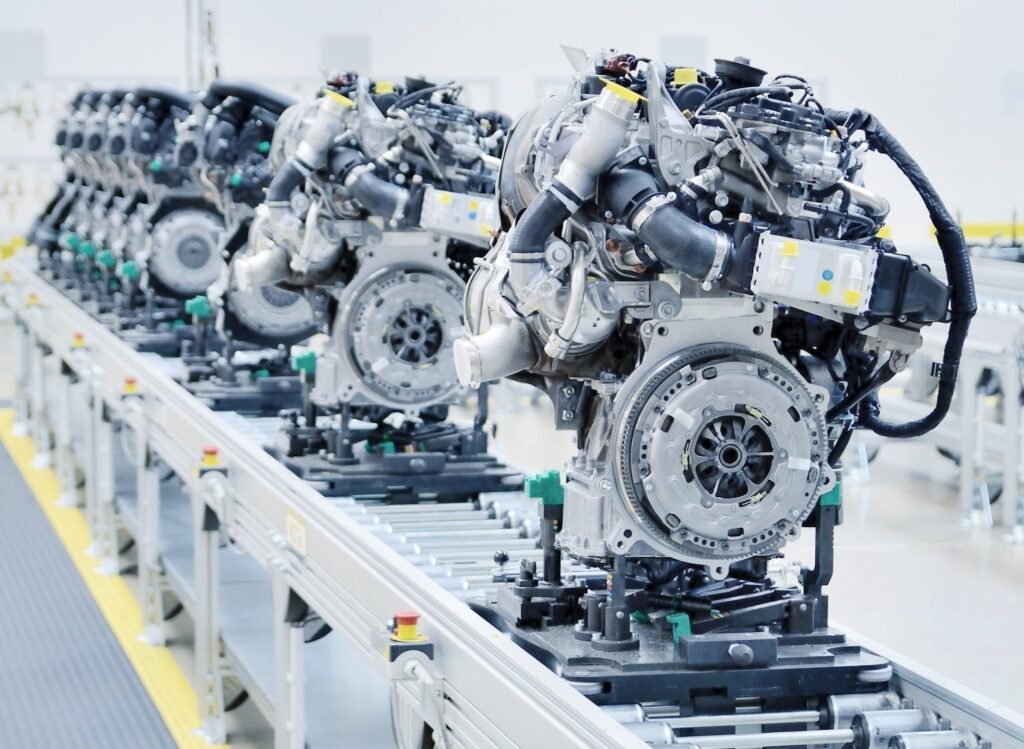
How is digitisation changing the face of manufacturing companies and the automotive industry? By Tereza Bergr, Project Coordinator, Ajka-Solution | Czech Republic Everything is constantly changing and evolving. New things replace the old. Home furnishings, appliances, cars. This is despite the typical human temperament, which tends to lean more towards the stereotype. Digitalization offers many advantages for individuals, simplifying our daily activities. In industry, its impact is even more visible. It is changing the face of manufacturing companies and the entire automotive industry. Digitalisation is undoubtedly a major trend in business and industry today. More and more analysts and CEOs are stressing its importance to stay competitive. In many industries and sectors, digitalization is a key enabler for efficiency, automation, innovation and improved customer experience. Procrastinating on digitalisation can have a negative impact on a company’s competitiveness. So can ill-considered investments in digital technology. Set your company’s digital strategy, analyze your needs and processes. The benefits of digitalisation will be multiplied. Czech Industry Analysis 2023 This fact is also realized by 207 respondents of the Czech Industry Analysis 2023, prepared by the National Centre for Industry 4.0. The interviews were conducted with key representatives of selected companies of the Czech industry. Manufacturing companies are planning to continue investing in new technologies in the coming years. This is despite the receding jump in input prices and the overall difficult market situation. 65% of companies plan to increase investment in innovation. On average, they intend to increase innovation spending by 14%. Only 9% of the companies surveyed plan to limit innovation. The research clearly shows how companies are aware of the importance of data.  Automatic data collection is carried out by 74% of large companies and 41% of SMEs. However, few of them claim to link these data and create a unified whole. Smaller companies do not even collect and evaluate data immediately, but rather only at certain intervals. Digitisation in a positive light Digitisation, data collection, instant analysis and short response times have many positives for companies. The efficiency of production processes is increased. Data gives companies an overview of machine usage, performance, raw material consumption, Costs are coming down. Optimisation of production processes leads to lower costs. The need for manual labour is also reduced. The quality of the products is increasing. Modern technologies better monitor, evaluate and optimise the production process. The quality of the resulting products ultimately increases. Information on complaints, defects, customer feedback is more readily available. The correlation of data (e.g. displayed via the WorkSys platform) enables more flexible identification of areas for improvement. The response to change is faster. Flexibility grows. Digital tools allow companies to react quickly to changes in the market or changes in customer requirements. The company effectively adapts its strategy and processes. Decision making is better, it stands on solid ground. The use of big data and analytics tools gives companies a comprehensive view of their business, processes, operations. It facilitates decision making processes for production, inventory planning, resource allocation. Based on historical data, companies can better predict future demand. Prevent production errors by using a digital twin (e.g. Twinzo). Competitiveness increases. Companies can gain a competitive advantage if they effectively use digital technologies, data and analyse customer preferences including feedback. They can better identify market trends and adapt products to them. Concerns about digitisation There are still many uncertainties and potential obstacles around the introduction of Industry 4.0 and AI into manufacturing. Most of them are related to artificial intelligence. Its deployment in companies is hampered by unclear responsibilities. Greater openness to putting AI into practice is likely to come with clarification of responsibilities for decisions made by AI. Hand in hand with this must be a clarification of who is responsible for any damage caused by AI. 75% of directors of the Czech Industry Analysis 2023 complain about the lack of clarity in AI legislation. According to the survey results, 36% of large companies and 12% of SMEs have encountered legal obstacles when implementing Industry 4.0 and AI. AI is still an open chapter and a very new topic. It is not only the industry that is struggling with intellectual property rights in AI deployment, patent protection legislation, copyright. Higher efficiency, better decision-making, lower costs, production flexibility, better competitiveness are sufficient arguments for the digitalisation of a company. It is not easy to set a specific time estimate for when it is appropriate to embark on this wave. It depends on many factors such as the industry you are in, the size of the company, the competitive environment, available resources and many other variables. Focus on comprehensive digitisation. And we don’t mean a monstrous IT solution for the entire company. Focus on the digitalisation plan, the interconnection of systems and the logical links between them. Conduct a digital audit in your company. If you need support, direction, experience sharing, get in touch. Source: https://www.ajka-solution.cz/en/jak-digitalizace-meni-podobu-vyrobnich-firem-a-automotive/

Insights

When Culture Eats Strategy for Breakfast

When Culture Eats Strategy for Breakfast By David Y Smith, Founder & CEO, Elderberry.work| Canada Learnings from Personal Experience with McDonald’s and Whole Foods Market, and the Value of Experience Overview Food retailing, whether in supermarkets or restaurants, is extremely fast-paced. Your weekly sales define whether you are winning or losing. Both Whole Foods Market and McDonald’s have won their categories through faithfulness to their mission and values, cultures of innovation, valuing experience, and emergent strategies. I had the privilege of working for McDonald’s and Whole Foods as they evolved from new category creators that attracted competitors that they mostly didn’t worry about, to becoming much more concerned about competition and market share. The 2 companies are of course vastly different in most ways, but remarkably similar when it comes to harnessing the power of culture over strategy. They were at inflection points in their development, and their culture was their competitive advantage that enabled them to continue to win, where many companies facing the same situations have not. Although both these examples come from a different era, there is ample learning from dusting off their very successful playbooks. All sizes and stages of organizations will find relevancy here. Especially growth stage companies to help shape their own cultures and approaches to strategy in today’s challenging contexts. The 3 Key Ingredients, 7 Operating Practices, 3 Downsides, and 5 Top Takeaways provide actionable guidance. Introduction I was recently reminded of the saying “culture eats strategy for breakfast” (apparently mis-attributed to Peter Drucker). It made me reflect on my experiences with 2 leading companies that powerfully demonstrated that maxim. My learning from those experiences provides lessons that I believe are equally powerful for businesses today as they hope to shape and maintain their cultures. Especially with lasting impacts from remote working, younger adults with different experiences, expectations, and attitudes, high turnover rates, and the accelerated adoption of artificial intelligence. McDonald’s Canada and Whole Foods Market USA Both companies have been criticized for elements of their businesses. McDonald’s for being more of a real estate company that happens to sell burgers, because of its brilliant decision long ago to benefit from real estate valuations by owning its store sites. Whole Foods for being “Whole Paycheck” and selling organic food with perceived benefits more than actual. But their customers weren’t concerned about that, and both had a lot more going on behind the scenes that enabled their massive successes. I was a regional marketing manager for McDonald’s Canada in the early 1990s, and then in the early 2000s was VP Marketing for Whole Foods Market, USA. Both created new but very different food retail categories. At that time they were highly decentralized, and most decisions were made close to the front lines. My 2 roles gave me different perspectives, from a region with McDonald’s, and from a national office with Whole Foods, where aligning the regions on key initiatives was paramount. Approaching Inflection Points: Awakening to Competition There’s a certain arrogance that comes from creating new categories and being runaway successes with little threatening competition. They were both enjoying strong same store sales growth (how retailers report on organic sales growth), though less strong and harder to earn than previously. Both began to realize their respective competitive landscapes were evolving quickly. McDonald’s and the growing list of competitors for each “daypart”, and Whole Foods and the growing listings of organic and natural items in conventional supermarkets. It needs to be noted that once they became concerned about competitive advantage, they were even more driven to succeed, unlike too many companies in similar situations who now no longer exist or are a shadow of their previous size. McDonald’s Canada When I joined McDonald’s I naturally asked to see the strategic plan. My boss advised me that “we don’t work that way”. Having recently completed my MBA, this was of course surprising. However, 8-10 months later a new strategic planning process, 3-1-Q, was introduced by its new CEO in Oakbrook, IL. The business was about to evolve, starting with paying more attention to the competition. Until that point, it had been a bunch of guys (overwhelmingly) who had grown up in the business, most often starting during or after high school, focused on perfecting the business model, driving efficiencies and profitability. The 3-1-Q process began with leadership teams visiting key competitors in each major city in its region. We visited a lot of fast food outlets that week – tasting everywhere. After eating all that junk food, I felt like Morgan Spurlock (“Supersize Me”) must have felt when he did it years later. Whole Foods Market, USA Five years after leaving McDonald’s (for an international posting and then a Northern California tech start-up), I joined the Whole Foods leadership team. There were 8 operating regions across the USA, in  total about 120 stores. Most regions had grown in part by acquisitions and now focused on building new stores faster. Each store provided a totally different look and feel and customer experience, not only from region to region, but within regions from store to store. As I shared at my first leadership meeting, it was like an orchestra where the strings, wind, and percussion were each playing a different song. Whole Foods’ leadership team was split into 2 camps when it came to articulating its strategic direction: about half believed they were first and foremost a gourmet supermarket, the other half felt they were firstly a natural/organic supermarket. I brought them together by creating a positioning matrix, where they owned the quadrant that combined both elements. I reasoned that conventional supermarkets could never make their 30,000 items on shelf all natural/organic, and natural food stores could never rise to the gourmet foods level. We moved toward a harmonized branding and store experience once we created a brand style guide and aligned all the marketing and store development teams on using it. The CFO loved that because it would drive increased enterprise goodwill value. To complement the

Insights

In an unpredictable world, does Interim Management hold?

𝗜𝗻 𝗮𝗻 𝘂𝗻𝗽𝗿𝗲𝗱𝗶𝗰𝘁𝗮𝗯𝗹𝗲 𝘄𝗼𝗿𝗹𝗱, 𝗱𝗼𝗲𝘀 𝗜𝗻𝘁𝗲𝗿𝗶𝗺 𝗠𝗮𝗻𝗮𝗴𝗲𝗺𝗲𝗻𝘁 𝗵𝗼𝗹𝗱? By Priti Gulati, Founder, EXPERTIES | India Yes, very much so, if not more. WHEN uncertainty reigns high, would companies like to embark on leadership hiring on a permanent basis? The role can just as well be handled by interim leaders and may overcome any sudden pause in leadership hiring. WHEN companies need to reinvent themselves in a fast-changing economic scenario? A visionary leader may spot a rising opportunity and help companies reposition their products or services. WHEN quick decisions need to be taken to cut costs to brace for an uncertain future? An external manager can provide a layer of objectivity and would be able to undertake a quick review to guide the transformation. WHEN uncertainty clouds the management’s mind on whether to pause a project? A seasoned leader may be able to assess its viability and drive the work or change course, as merited. WHEN companies grapple with an internal challenge? An interim can bring in strategic, technical or functional expertise as the need may be. 𝗧𝗵𝗲 𝗩𝗮𝗹𝘂𝗲 𝗔𝗱𝗱 Executive Interim Managers – with years of experience in managing companies in their area of ​​specialization and diverse markets, local or cross-border – provide high-quality expertise with speed and agility through quick onboarding. They bridge knowledge gaps, ensure outcomes, drive change with minimal internal re-alignment; and with their engagement costs directly aligned to the assignment’s duration, ensure overall strategic advantages. Evaluate and keep going strong! Source: https://www.linkedin.com/posts/pritigulati_interimmanagement-executiveleadership-crisismanagement-activity-7439685474576703489-DJ3g/

Insights

Interim Financial Management A Case Study of Stabilization and Financing Acquisition in a Food Company

Interim Financial Management A Case Study of Stabilization and Financing Acquisition in a Food Company By Katarzyna Gębala, Senior Business Advisor, Inwenta Interim Partners | Poland When a food-sector company faced declining performance and a real risk of halted production, interim financial management became the key to survival. In just four months, an experienced interim manager helped uncover inconsistencies in financial data, rebuild credible forecasts, and support critical negotiations with lenders. The result? Secured funding, restored stability, and a clear path for growth. This case shows how combining operational insight with strategic financial expertise can quickly rebuild trust with financial institutions and protect business continuity. Discover how interim management can turn financial pressure into an opportunity for transformation. Source: https://interimpartners.inwenta.pl/blog/case-study/interim-management-w-finansach-case-study-stabilizacji-i-pozyskania-finansowania-w-firmie-spozywczej/

Insights

How AI is fundamentally changing the valuation and marketability of software companies

How AI is fundamentally changing the valuation and marketability of software companies By Rocher Hulst, Director, JBR | Netherlands AI resilience is primarily a structural issue, with valuation effects that are unevenly distributed. Companies whose core functions can be directly replaced by AI agents—such as workflow automation, reporting, or data visualization—face margin pressure and rising customer churn. In contrast, firms with defensible value propositions are far more resilient. These include companies built on unique, proprietary data that AI cannot replicate, or those serving as a single source of truth. Business‑critical software deeply integrated into customer processes creates high switching costs, especially within complex ecosystems and legacy-heavy sectors like manufacturing and the public sector. Additional protection comes from deep domain expertise, regulatory constraints that require human judgment, and strong network or platform effects that AI can imitate functionally but not structurally. Read the full article: https://jbr.nl/actueel/context-wint-van-functionaliteit/

Insights

How to prepare a business crisis management plan: Steps and Best practices

How to prepare a business crisis management plan: Steps and Best practices By Yon Arratibel, Partner at NORGESTION and Managing Director of the Advisory & Interim Management Area | Netherlands Crises rarely come without warning, but organizations often fail to act due to a “normality bias” that leads them to underestimate risks. A well-designed crisis management plan does not prevent incidents but reduces their impact and protects trust and reputation. The article outlines a practical framework for managing crises, starting with a clear definition based on impact, urgency, and external exposure. It emphasizes prioritizing the most likely and severe scenarios, and establishing a clear governance model separating decision-making, execution, and communication. Effective crisis management relies on structured decision-making under uncertainty, rapid and transparent communication, and operational continuity planning. It also highlights the importance of legal alignment, regular simulation exercises, and post-crisis analysis to strengthen future response. Ultimately, success lies in replacing chaos with a clear, disciplined system. Read the Full Article: https://www.norgestion.com/actualidad/como-preparar-un-plan-de-gestion-de-crisis-empresarial-pasos-y-mejores-practicas

Insights

Interim Management as a Strategic Growth Lever

Interim Management as a Strategic Growth Lever By Becci Butler, Administrator, Russam | UK Interim management is rapidly becoming a strategic growth tool for organisations navigating change and complexity. As Jason Atkinson, Managing Director of Russam, highlights, nearly half of organisations are planning to appoint interim leaders this year, a significant increase compared to last year. This reflects growing demand for interim management, interim executives, and flexible leadership solutions. Businesses are increasingly relying on interim managers, fractional leadership, and part time executives to deliver immediate impact. From interim finance leadership and CFO support to AI strategy, systems integration, and international transformation, interim professionals help stabilise operations and accelerate business performance. This shift highlights the importance of experienced interim leadership in driving business transformation, improving agility, and supporting organisations through periods of rapid change and evolving strategic priorities. Source: https://russam.co.uk/interim-management-as-a-strategic-growth-lever/

Insights

WIL Group expands its geographical footprint in North America with the arrival of Elderberry.work

WIL Group expands its geographical footprint in North America with the arrival of Elderberry.work WIL Group is proud to announce its new country partner, Elderberry.work, an innovative player in the fast-emerging Canadian interim and fractional management industry. This collaboration marks a significant step in expanding Elderberry.work’s reach and service offerings, adding greater international opportunities to domestic placements for Canadian-based clients and executives. At the same time, it helps round out WIL Group’s network, providing the ability for clients of all WIL Group members to source local Canadian expertise for their clients. This new collaboration comes at a particularly challenging time for Canadian businesses, as tariffs are redrawing our traditional trading relationships, spurring a much more international focus. The Canadian interim and fractional executive market is expected to experience strong growth ahead as companies seek greater agility and results from leaner cost structures. Elderberry.work is focused on quality and speed, through its curated age 45+ talent pipeline from all functions, all seniorities, and all industries, and its self-serve, on-demand access to our roster of independent consultants. “We are building out an efficient “one-stop shop” for our clients, making it as easy as “plug and play” to inject new and additional experience”, said David Y Smith, founder and CEO of Elderberry.work, “Our WIL partnership helps us extend our efficiency for clients to their international requirements, through a two-pronged approach – Canadian-based consultants with experience in the targeted countries, and boots on the ground in those countries through the WIL Group network.” The WIL Group continues to expand its geographic presence in North America by adding Elderberry.work as a new partner in Canada. This strengthens our position in the Americas alongside our U.S. partner, and we are proud to provide our clients with solutions in every local market – noted Alexander de Beir, Chairman of the WIL Group. About Us Elderberry.work is a B2B services marketplace which matches the proven experience of Canadian businesspeople with in-market startups, small and medium-sized businesses, private equity, for interim, fractional, consulting, contractor, and freelance placements. We feature (1) a unique, curated talent pipeline of age 45+ independent consultants, all functions, all seniorities – from C-suite to managers – and all industries, and (2) self-serve, on-demand access to consultants. We also offer full-service placements. In addition to serving Canadian business domestic requirements, we support them in their international expansion, including through WIL Group partners. Through our WIL Group partnership, we also provide full service to international clients seeking interim/fractional local expertise in Canada. Our vision and approach At WIL Group, our vision is clear – to be the foremost company for global interim, transition, and transformation managers. We’ve embraced a unique ‘international multi-sourcing’ model, harnessing the strengths of each member firm to ensure the selection of the best talent for global assignments. Our services Performance Improvement & Digital Transformation Restructuring & Turnaround Private Equity & Integration of Acquisition International Deployment & Program Management Values and business code of conduct Our commitment to excellence is anchored in our core values and reflected in our Code of Conduct: Client dedication: We meticulously define each assignment, utilising our full resources to find optimal solutions. Regular meetings with clients and Interim Leaders foster a culture of continuous improvement and shared knowledge. Ethical practices: Clients’ interests are paramount. We adhere to local laws, business ethics, and uphold confidentiality, ensuring a professional and respectful communication approach. Teamwork: Collaboration is at our core. We support one another, avoid short-term gains at the expense of clients or the group, and adhere to decisions and rules. Honesty, transparency, and conflict avoidance are our guiding principles. Recognition of partners: We build a diverse and talented group, selecting Interim Leaders and experts based on merit. We value our partners’ contributions as much as we value our clients.

Scroll to Top